
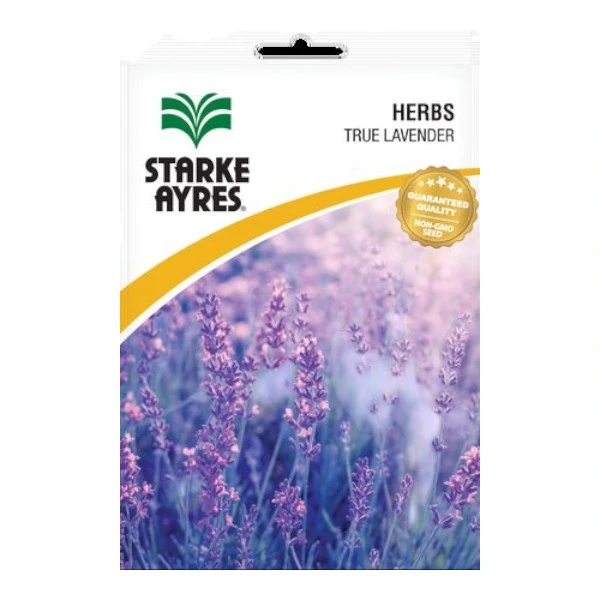
Immerse your garden in the calming fragrance and beautiful purple hues of Starke Ayres Lavender. This 1g pack of seeds offers the opportunity to grow your own aromatic lavender plants, perfect for creating a serene outdoor space, attracting beneficial pollinators, or even for culinary and craft uses. While known for its somewhat slow and sometimes challenging germination, the patience required is well rewarded with the establishment of hardy, drought-tolerant, and incredibly fragrant plants that will bring joy for years.
Starke Ayres Lavender | 1g Benefits and Features
- Fragrant & Aromatic: Known for its distinctive, soothing fragrance, perfect for aromatherapy and enhancing garden ambience.
- Beautiful Blooms: Produces spikes of lovely purple flowers that add visual appeal to any garden or container.
- Attracts Pollinators: A magnet for bees and butterflies, promoting biodiversity and health in your garden.
- Drought-Tolerant: Once established, lavender is highly drought-resistant, making it a low-maintenance choice for water-wise gardening.
- Versatile Use: Ideal for garden borders, rockeries, containers, culinary applications (certain species), essential oil extraction, and dried floral arrangements.
- Pest Resistant: The strong scent of lavender naturally deters many common garden pests.
- Perennial: Once established, it will return year after year, providing long-term beauty and fragrance.
Steps to Follow For Sowing Starke Ayres Lavender | 1g
Preparation:
- Choose Location: Select a spot that receives full sun (at least 6-8 hours of direct sunlight daily). Lavender thrives in hot, sunny conditions.
- Prepare Soil: Lavender prefers well-draining, sandy, or gravelly soil with a neutral to slightly alkaline pH (6.5-7.5). If your soil is heavy clay, amend it heavily with sand, grit, and compost to improve drainage. Good drainage is crucial for lavender’s success.
- Cold Stratification (Highly Recommended): Lavender seeds often have better germination rates after a period of cold stratification.
- Mix seeds with a small amount of moist sand or vermiculite.
- Place the mixture in a sealed plastic bag or container.
- Refrigerate (at about 4°C/40°F) for 3-6 weeks before sowing.
Sowing the Seeds:
- Timing: Sow seeds in Spring (September to November in Hartbeespoort) after the danger of frost has passed and soil temperatures begin to warm. If you cold stratified, sow after stratification.
- Sow Shallowly: Sow seeds very thinly on the surface of the prepared soil or seed starting mix. Cover them very lightly with only 3mm of fine soil or vermiculite, as light aids germination.
- Water Gently: Gently mist the surface with water to settle the seeds. Avoid heavy watering that could wash seeds away.
- Maintain Moisture: Keep the soil consistently moist but never soggy during the long germination period (21-90 days). Use a fine spray bottle for watering to prevent disturbing the tiny seeds.
- Warmth: Ensure a warm environment (around 18-24°C / 65-75°F) for germination.
After Germination/Transplanting:
- Thinning: Once seedlings are a few true leaves old and large enough to handle, thin them to a final spacing of 30-45cm apart, depending on the expected mature size of the lavender variety.
- Watering: Water regularly during the first year of establishment. Once established (typically after a year), lavender is very drought-tolerant and requires minimal watering, especially in well-draining soil. Overwatering is a common cause of lavender failure.
- Feeding: Lavender generally does not require heavy fertilisation. An annual application of a balanced, slow-release fertiliser in early spring is usually sufficient. Avoid high-nitrogen fertilisers.
- Pruning: Lightly prune lavender after flowering to maintain shape and encourage bushier growth. Avoid cutting into old wood.
A Few Scenarios Where the Product Can Be Used:
- Herb Gardens: An Aromatic and beautiful addition to any herb garden.
- Pollinator Gardens: Create a bee and butterfly-friendly haven.
- Borders and Edging: Use to define garden beds or walkways with fragrance and colour.
- Rock Gardens: Thrive in well-draining, sunny conditions typical of rock gardens.
- Containers: Grow in pots on patios or balconies for easy access to their fragrance.
- Sensory Gardens: An essential plant for gardens designed to engage the senses.
Other Products You May Need For Your Gardening Project
Health and Safety
- Always wear gardening gloves to protect your hands.
- Wash your hands thoroughly after handling seeds and soil.
- Store seeds in a cool, dry place, out of reach of children and pets.
- While some lavender species are culinary, always ensure the specific species grown is safe for consumption before use.
- Be mindful of sun exposure while gardening; wear sunscreen and a hat.
- Ensure good air circulation around plants to prevent fungal issues, especially in humid climates.
Want to know more about maintaining your garden tools? Click On This Link
Reviews
There are no reviews yet.